
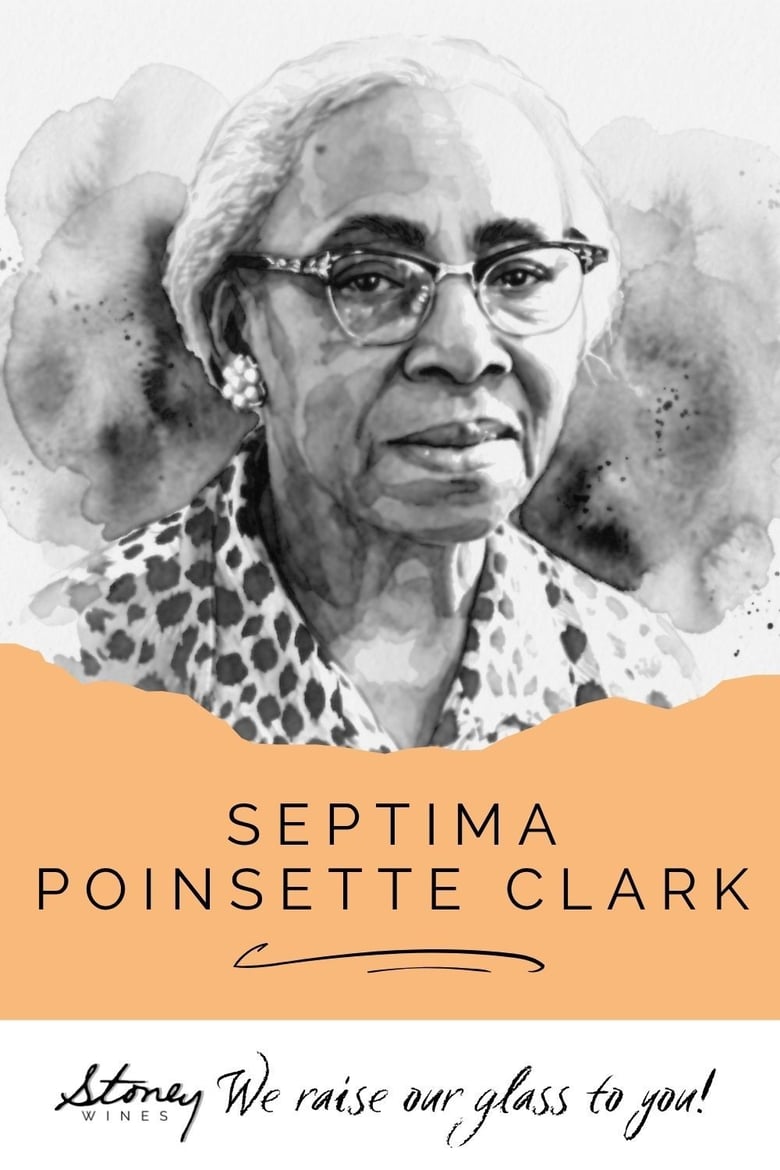
Septima Poinsette Clark Teaches Freedom So We Raise Our Glass!
At Stoney Wines, we believe in celebrating individuals who have made the world a better, safer & more innovative place. This week, we raise our glass to Septima Poinsette Clark—the woman Martin Luther King Jr. called the "Mother of the Movement" whose name most Americans still don't know, but whose work made the entire Civil Rights Movement possible.
That erasure is not an accident. It is the cost of being a Black woman doing the unglamorous, essential, ground-level work that movements are actually built on.
Born in 1898 in Charleston, South Carolina, to a father who had been born into slavery, Septima grew up understanding that education was the most powerful weapon available to Black Americans. She spent four decades teaching in South Carolina's public schools—fighting for the right of Black teachers to work in Charleston classrooms, campaigning alongside Thurgood Marshall for equal pay, and quietly building the civic knowledge of every student she taught.
In 1956, the state of South Carolina fired her for refusing to hide her NAACP membership. She lost her job and her pension after 40 years of service. Most people would have walked away.
Septima built something bigger.
She joined the Highlander Folk School in Tennessee and developed what would become her most lasting contribution: Citizenship Schools. The idea was simple and revolutionary—teach Black Southerners to read and write, and you give them the tools to register to vote, understand their rights, and become leaders in their own communities. Classes were held in the back rooms of grocery stores, hidden from hostile white eyes. Teachers were often former students themselves. The curriculum was practical, personal, and transformative.
The first Citizenship School opened on Johns Island, South Carolina, in 1957. By the time Septima retired in 1970, she had overseen the creation of more than 800 Citizenship Schools across the Deep South, training an estimated 10,000 leaders and teaching more than 25,000 people to read. Those newly literate citizens registered to vote, ran for office, organized their communities, and became the grassroots backbone of the Civil Rights Movement.
Rosa Parks attended Septima's workshops at Highlander and later said that being around her gave her the courage to do what she did on that Montgomery bus. Martin Luther King Jr. brought Septima's program into the Southern Christian Leadership Conference, making her Director of Education—while simultaneously fighting his own colleagues who didn't want a woman on the executive board. King acknowledged her anyway. He knew what she had built.
Her grassroots voting rights education didn't just support the movement—it fueled it. The march from Selma, the freedom schools in Mississippi, the surge in Black voter registration that changed the political map of the South—all of it grew from the seeds Septima planted in back rooms with pencils and paper and an unshakeable belief that literacy means liberation.
She was fired for her convictions. Sidelined by the very men whose movement she sustained. Overlooked by history books that had plenty of room for the march but not the classroom that made the marchers.
And still, she built.
So as we pour a glass of Stoney Wines this month, we honor Septima Poinsette Clark for her patience, her brilliance, and her lifelong insistence that you cannot have freedom without education—and that both are worth fighting for.
🥂 Here's to Septima—a teacher, a builder, and the mother of a movement that changed America. Cheers to her legacy and the thousands of leaders she quietly created.
Know someone doing the behind-the-scenes work that makes everything else possible? Drop their name in the comments—we'd love to raise our glass to them too.

Comments (0)
Join the conversation
Be the first to share your thoughts on this post
No comments yet
Start the discussion and be the first to comment